Wednesday, 3 February 2010

Transforming sight


The very beholding of Christ is a transforming sight. The Spirit that makes us new creatures, and stirs us up to behold this servant [see Matt. 12:18], it is a transforming beholding. If we look upon him with the eye of faith, it will make us like Christ; for the gospel is a mirror, and such a mirror, that when we look into it, and see ourselves interested in it, we are changed from glory to glory, 2 Cor. iii.18. A man cannot look upon the love of God and of Christ in the gospel, but it will change him to be like God and Christ. For how can we see Christ, and God in Christ, but we shall see how God hates sin, and this will transform us to hate it as God doth, who hated it so that it could not be expiated but with the blood of Christ, God-man. So, seeing the holiness of God in it, it will transform us to be holy. When we see the love of God in the gospel, and the love of Christ giving himself for us, this will transform us to love God. When we see the humility and obedience of Christ, when we look on Christ as God's chosen servant in all this, and as our surety and head, it transforms us to the like humility and obedience. Those that find not their dispositions in some comfortable measure wrought to this blessed transformation, they have not yet those eyes that the Holy Ghost requireth here. 'Behold my servant whom I have chosen, my beloved in whom my soul delighteth.'
Richard Sibbes (1577-1635), A Description of Christ


That's all very well - but does it really work? Listen to Sibbes' younger contemporary, Thomas Fuller, as he gives an assessment both of Sibbes' character and - most interestingly - the reason for it.


He was most eminent for that grace which is most worth, yet costs the least to keep it, viz., Christian humility. Of all points of divinity, he most frequently pressed that of Christ's incarnation; and if the angels desired to pry into that mystery, no wonder if this angelical man had a longing to look therein. A learned divine imputed this good doctor's humility to his much meditating on that point of Christ's humiliation when he took our flesh upon him... [This shows us] that men's souls improve most in those graces whereon they have most constant meditation, whereof this worthy doctor was an eminent instance.


This works both positively and negatively. For a contemporary slant on this issue Greg Beale's recent book 'We become what we worship' looks excellent. I haven't read it yet - but I recently heard Beale speaking on the subject, and I came home and promptly ordered the book!

Monday, 1 February 2010

Speaking with authority

Yesterday I began preaching through the 5 'solas' of the Reformation, beginning with Sola Scriptura, and it'll be no great surprise to learn that I took 2 Timothy 3:1-4:5 as the passage to expound. It was really exciting to grasp afresh the authority of God's word - this message of 'breathed out by God' therefore I will do everything I can to study carefully and comprehend it because the truth changes things. What I believe will change the way I act. (Therefore, for example, if I believe I'm just an advanced animal I'll act as though I'm just an advanced animal.)

It seems very obvious to me that we have a major crisis of authority in modern, Western culture - we don't want anyone to tell me what I ought to do in any absolute moral sense. But what struck me in the middle of preaching(!) was that not only does our culture hate the idea of such authority, but it also reverses things completely. In the absence of any abiding authority we seek to give ourselves direction and purpose instead by deciding on what goals we would like to reach and then work out what is 'right' and 'wrong' according to what will help or hinder the achievement of those goals! The example that springs to mind is the government's modern obsession with targets. You decide on your target, then tailor absolutely everything to help achieve it. How different this is to listening to unchanging truth and allowing it to change my life!

That's all very well, but how do you know you've got the target right without any transcendant authority? Yesterday evening I heard of a hospital that is aiming for foundation status. How are they going to achieve that? Well, according to my informant it's all about patients' opinions of the hospital, and therefore the hospital will never do anything that might give patients a negative opinion of the hosptial. But where does medical expertise get a look in? It sounds like another case of an expert authority being required to play second fiddle to subjective opinions in order to achieve the goal they've set their hearts on.

How desperate it is that we who possess knowledge of THE ultimate authority speak it plainly and without apology into such a culture! We cannot go on as we are, because our current goal-focused, authorityless ways are terribly unstable, and cannot give us what we seek. It leaves us perpetually in the situation of 2 Timothy 3:7 - those who are "always learning and never able to come to knowledge of the truth." We have the rock to replace the shifting sand on which our society is building. How shall they hear? Christians need to hear the challenge of Taylor Mali's poem that Rosemary has linked to here. Mali may not be thinking in these biblical categories, but the force of what he says is an urgent note to be sounded for gospel proclamation. The ultimate truth of God's word changes things in the most beautiful way because it is given to us that we may be 'complete' (2 Tim. 3:17), and to be complete as a human being is to reflect the image of the beautiful God. Goal-setting without the truth is just guessing and hoping for the best.

Monday, 14 December 2009

Who has faith?

This post began life as a talk for a meeting at church yesterday under the title 'Is God a Delusion?'

A new phenomenon has arisen within the last few years that has gained the label ‘the new atheism’. This new flavour of atheism is far more aggressive than its predecessors in its attack on religion, and especially (given its cultural context of the UK and USA) Christianity. The big splash made by the new atheists in this country came with Richard Dawkins’ 2006 book ‘The God Delusion’. It very quickly became a bestseller and has become very influential in many people’s thinking. The other most publicised happening that is related to this (though I’m not sure directly) was the advertising campaign on London buses by the British Humanist Association – ‘There’s probably no God so stop worrying and enjoy your life’ which was enthusiastically supported by Dawkins. They believed it would be ‘a breath of fresh air’ that would get people thinking – and as Dawkins commented, ‘thinking is anathema to religion’.

This directs us to a critical starting point – the new atheists want you to believe that any religious idea is simply so absurd that you needn’t bother listening. Please take that fact on board, because in my experience they’ve been very successful in that regard - I’ve found it very hard to get those who share their ideas to listen to me in debate. Why? Because they already “know” that I’m basing my life on blind faith (incorporating their own special definition of faith) whereas they are basing theirs on the facts. I don’t doubt that you could find religious groups out there for whom that could be true, but that is far from being universally true (Dawkins also wants you to believe that all religion can be treated as though it is the same which is manifestly not the case – as modern anthropologists will tell you). I can’t defend some homogenous definition of ‘religion’ that bears no relation to reality; I can only defend the faith I know and teach, which isn’t even representative of all that calls itself ‘Christian’. The reason I am an evangelical (a much misunderstood word!) is because I believe it best fits reality. I’m not going to claim anything silly, like ‘and I’ll now prove it’ or ‘you’ll give up your atheism by the end of this meeting’! In this very short time I can only hope to raise some vital questions in your minds, and begin to see if the claims of Dawkins and his comrades can stand up to scrutiny.

Deciding just what to tackle in this brief time has been quite a struggle since The God Delusion covers so many areas, and makes so many assertions that we can’t even begin to tackle them all. I just want to raise two issues this afternoon that raise serious questions – first of all I want to question whether Christian faith really is the infantile, irrational thing Dawkins wants us to believe it is. Secondly, to begin to demonstrate this, we should ask how reliable Dawkins’ sources are when it comes to his (brief) critique of the reliability of the Bible?

According to Dawkins, faith ‘means blind trust, in the absence of evidence, even in the teeth of evidence.’ I believe he first gave this definition in The Selfish Gene in 1976. By the time the 2nd edition came out in 1989 this view had hardened to the extent that faith qualified ‘as a kind of mental illness’. For Dawkins this is a core belief that colours his whole attitude to religion. Indeed, there is psychological research that demonstrates that people ‘tend to seek out, recall, and interpret evidence in a manner that sustains beliefs’. In other words, religious people will tend to interpret evidence in such a way as supports their religious ideas, but also (and here’s something that’s usually ignored) atheists will tend to interpret evidence in such a way as supports their atheistic ideas. Challenging our worldview is actually quite difficult because it is so deeply engrained in us, but you must not believe that atheists do not have these engrained prejudices in their thinking because it is patently untrue (as we shall see from the evidence that Dawkins seeks out and the interpretation he gives it)! The intellectually responsible thing to do is to recognise your bias, and then try and take account of it when you consider evidence.

So how does Dawkins’ definition of faith fare? Alister McGrath:

‘Dawkins has his own views of what religious people believe, and proceeds to rubbish these ideas with enthusiasm… To put it bluntly, Dawkins’ engagement with theology is superficial and inaccurate, often amounting to little more than cheap point scoring… His tendency to misrepresent the views of his opponents is the least attractive aspect of his writings.’

His definition of faith might seem fine… until you discover that you can’t find a Christian theologian to back Dawkins up (the only exception I found was quoting Luther without engaging with his context). He offers no substantial evidence that his definition is representative of any religion, let alone Christianity. By contrast, here’s the definition of W.H. Griffith-Thomas (1861-1924) who was principal of Wycliffe Hall theological college (part of Oxford University):

‘[Faith] affects the whole of man’s nature. If commences with the conviction of the mind based on adequate evidence; it continues in the confidence of the heart or emotions based on conviction, and it is crowned in the consent of the will, by means of which the conviction and confidence are expressed in conduct.’

That is representative of what Christians teach about faith! That is why I’m always delighted when Christians look into things, question and wrestle with real issues. It’s no great surprise that, having set up his straw man, Dawkins easily knocks him down. But the idea that religious people could be thinking, logical people who apply rigorous intellects to their religion is anathema to Dawkins – for some reason he refuses to acknowledge the mountain of evidence to the contrary. So you could say that his definition of faith fits his own faith in his definition of faith, if not much else!

Atheism requires as much faith as any kind of theism. If we take a responsible definition of faith I see no reason why that should be a problem. The atheist must have faith that science will provide all the answers (since it hasn’t yet). The Christian must have faith that ultimate answers are given by revelation of God in the Bible. The question is whether or not such faith is reasonable. It would be a great benefit to this debate if the ridiculous rhetoric that ‘atheism is based on reason whilst faith relies blind trust and subjectivity’ was finally binned on the basis of being untrue on both sides!

If that is the case, then are there credible reasons for believing what the Bible has to say? Is my faith in the God shown to us in the pages of the Bible reasonable? Well, Christianity is nearly unique among world religions in that it is verifiable. By that I don’t mean that you can prove that it’s true, but that there are things you can check out that could show it up to be false. If the events of Jesus’ life, death and resurrection recorded in the Bible are not historical realities then Christianity is untrue and should be abandoned immediately. This whole area merits an entire meeting (at least) devoted to it, but I decided that since it will act as a good illustration of the reasonable nature of Christian faith, that I’d just offer a few brief points on the question of the Bible’s reliability.

Dawkins tells us,

‘Ever since the nineteenth century, scholarly theologians have made an overwhelming case that the gospels are not reliable accounts of what happened in the history of the real world… All were then copied and recopied, through many different ‘Chinese Whispers generations’ by fallible scribes who, in any case, had their own religious agendas.’

Have ‘scholarly theologians’ all thrown the Bible out as a reliable witness? Certainly there was the ‘higher criticism’ movement of the nineteenth century – who found its figurehead (though not originator) in Julius Wellhausen (1844-1918). (If you were taught at school that the Pentateuch was made of 4 different sources – J,E,D and P – that’s what we’re talking about, although now rather out of fashion.) But how reliable is this ‘scholarly’ criticism that Dawkins refers to? As long ago as the 1920s Prof. Robert Wilson investigated these ideas. In fact, having learnt around 26 Semitic languages and dialects he set to work studying the primary evidence, to see if Wellhausen’s dismissal of the Bible’s accuracy stood up to scrutiny. Take for example a raid by a king – Chedorlaomer – and his subsequent defeat by Abraham (Gen. 14). Wellhausen said it was ‘simply impossible’ and critics supposed a Jewish archaeologist between 900-300 BC must have invented the story in honour of Abraham by using the names he’d just discovered! Wilson found in his researches that such critics rarely checked the primary sources. His conclusion on this event?

‘Against the historical character of this narrative we have the assertion of Wellhausen and other critics of our times (only about 4000 years after the supposed expedition!) that the expedition was “simply impossible”, and that it is probably that the account may have been fabricated (or forged) by some person unknown, at some time unknown, for reasons unknown. Not one item of evidence in the way of time, place, logic, psychology, language, or customs, has been produced against the trustworthiness of the document… But a German professor says it is “simply impossible”, English followers echo “simply impossible”, and the Americans echo again “simply impossible”. And this assertion of “simply impossible” is called an “assured result of scientific criticism”!’

Wilson's findings sound a clear warning to us to ask what starting assumptions such 'scholars' have. If they've already decided the Bible is hopelessly inaccurate, don't expect to find any other conclusion than just that! Sir William Ramsay was doing similar work in the NT around the same time. (He was awarded 3 honorary fellowships from Oxford colleges and 9 honorary doctorates for his work.) He focused on Luke-Acts, but began believing Wellhausen’s theories – that it was written 160-180 AD and was largely fictional (as Dawkins wants us to believe). His conclusion after a lifetime of research?

“Further study… showed that the book [Acts] could bear the most minute scrutiny as an authority for the facts of the Aegean world, and that it was written with such judgement, skill, art and perception of truth as to be a model of historical statement.”

Prof. F.F. Bruce (only person to be president of both SSOT and SSNT) also added:

“Research in the field which forms the historical and geographical background to Luke’s narrative has not stood still since Ramsay’s heyday, but our respect for Luke’s reliability continues to grow as our knowledge of this field increases.”

Certainly you can always find theologians who will deny the accuracy of the Bible, but the interesting thing is that it has largely been the theologians who have been reticent to accept the Bible’s accuracy (since they have adopted an agenda that adapting theology to modern trends is the way forward), and the historians have been far more positive. Reasons like this show why TIME magazine could conclude, in an article surveying the credibility of the Bible,

“After more than two centuries of facing the heaviest scientific guns that could be brought to bear, the Bible has survived – and is perhaps better for the siege. Even on the critics’ own terms – historical fact – the Scriptures seem more acceptable now than they did when the rationalists began the attack.”

Have I disproved atheism and proved that Christianity is true? By no means. But I hope that even this very brief survey of a few issues highlights that the truth about the Christian faith is not what Richard Dawkins would like you to believe. If you only have the Richard Dawkins Encyclopaedia of Religion as your guide let me plead with you to investigate much further before dismissing the Christian faith because you are being seriously misled. These issues are far too important to allow such misrepresentation to get in the way, because if the Bible is true then it demands a response of wholehearted faith, but if it is false it should be discarded instantly. The apostle Paul went so far as to say that if the Bible is not historically true ‘your faith is futile… we are of all men most pitiable’ (1 Cor. 15:17, 19)! Richard Dawkins believes the case is so obvious that after a mere 5 pages of discussion he can conclude, ‘I shall not consider the Bible further as evidence for any kind of deity.’ He then fires at will to demolish the kind of faith we’ve discovered Christians don’t have. So please ask yourself very carefully, who is really deluded here?

Tuesday, 17 November 2009

Resting in God

I was reminded of a wonderful old hymn recently, and its been in my mind all day, providing so much peace:

I rest on thee our shield and our defender!
We go not forth alone against the foe;
Strong in thy strength, safe in thy keeping tender,
We rest on thee, and in thy name we go.

Yes, in thy name, O captain of salvation!
In thy dear name, all other names above:
Jesus our righteousness, our sure foundation,
Our Prince of glory and our King of love.

We go in faith, our own great weakness feeling,
And needing more each day thy grace to know:
Yet from our hearts a song of triumph pealing;
We rest on thee, and in thy name we go.

We rest on thee our shield and our defender!
Thine is the battle, thine shall be the praise;
When passing through the gates of pearly splendour,
Victors we rest with thee through endless days.
Edith G. Cherry (1872-97)

The tune (Finlandia) has such a quiet dignity about it, beautifully matched by the words - confident, but only in God, never in ourselves. This is a song to sing when we feel the enemy attacking, when we become painfully aware that this world is so broken, when we know of struggle, when we hear of situations we just can't understand, and yet when we know (or need to remind ourselves) that the battle is the Lord's and we can quietly rest in his love and sovereignty.

I'm really starting to love older hymns.

Saturday, 24 October 2009

Love Abused

How would you respond if your cousin wrote a book advocating polygamy? Unsurprisingly, poet William Cowper (1731-1800) responded in verse, with a poem entitled 'Love Abused':

What is there in the vale of life
Half so delightful as a Wife,
When friendship, love, and peace combine
To stamp the marriage-bond divine?
The stream of pure and genuine love
Derives its current from above;
And earth a second Eden shows,
Where'er the healing water flows:
But ah! if from the dykes and drains
Of sensual nature's feverish veins,
Lust, like a lawless headstrong flood,
Impregnated with ooze and mud,
Descending fast on every side,
Once mingles with the sacred tide,
Farewell the soul-enlivening scene!
The banks that wore a smiling green,
With rank defilement overspread,
Bewail their flowery beauties dead.
The stream, polluted, dark, and dull,
Diffused into a Stygian pool,
Through life's last melancholy years
Is fed with ever-flowing tears:
Complaints supply the zephyr's part,
And sighs that heave a breaking heart.

['Stygian' = 'Of or pertaining to the River Styx or the underworld... black, gloomy, indistinct, infernal, hellish']

Ok, so what? Polygamy isn't really a hot issue for me. But then look around society and quickly you can replace talk of polygamy with the very similar issue of socially-acceptable (even encouraged) serial monogamy. As a newcomer to Cowper's poetry (having recently found his collected poetical works on a secondhand bookstall) what strikes me is how incisive his insight can be at times, and how much he can say with so few words. Serial monogamy is the search for 'the one', 'Mr Right', and personal fulfilment - and it's everywhere in our society. Relationships are such a prominent idol - the holy grail of contentment, but what do we find?

'Farewell the soul-enlivening scene!'

We find we've lost something - somehow that fulfilment remains elusive, our souls are never quite satisfied. Why? Because we've abandoned the God-given scenario of marriage, that when undertaken in a godly and responsible way offers something comparable to a 'second Eden', we find that we just can't fill the hole that's left. You can see the last four lines in action all around you - just open your eyes.

But we don't see it. We've decided a priori that the Creator's instructions are dull, dusty and terribly inhibiting. So we're pursuing 'freedom' without the One who could show us how to find it (and what 'freedom' really is) - the One who is the Truth. With what effect? Here's the closing lines of 'The Progress of Error' (the first 12-page poem I've ever read!!) that so effectively describe what's going on... and point to the only answer.

Hear the just law - the judgement of the skies!
He that hates truth shall be the dupe of lies;
And he that will be cheated to the last,
Delusions strong as Hell shall bind him fast.
But if the wanderer his mistake discern,
Judge his own ways, and sigh for a return,
Bewildered once, must he bewail his loss
For ever and for ever? No - the Cross!
There, and there only (though the deist rave,
And atheist, if Earth bear so base a slave)
There, and there only, is the power to save.
There no delusive hope invites despair.
No mockery meets you, no deception there;
The spells and charms that blinded you before,
All vanish there, and fascinate no more.
I am no preacher; let this hint suffice -
The Cross once seen is death to every vice;
Else He that hung there suffered all his pain,
Bled, groaned, and agonized, and died in vain.

Friday, 23 October 2009

True religion


"Things have come to a pretty pass when religion is allowed to invade the sphere of private life."

William Lamb, British Prime Minister 1835-41

It's an understandable lament... viewed from a certain perspective. After all, what could be more delightful and fulfilling than being left to do exactly as I please in my own private life? What we want is a suitably undemanding religion with suitable guarantees for the afterlife. Or do we? Is that kind of religion worth anything? Does that kind of religion do anything other than soothe my conscience and allow my ego to carry on with whatever it fancies doing? We would ordinarily call that kind of arrangement a sham. Does it bring happiness anyway? I wonder if Lamb had really thought this through? Might the pain of his wife's scandalous affair with Lord Byron have been averted with a little meaningful 'religion'?

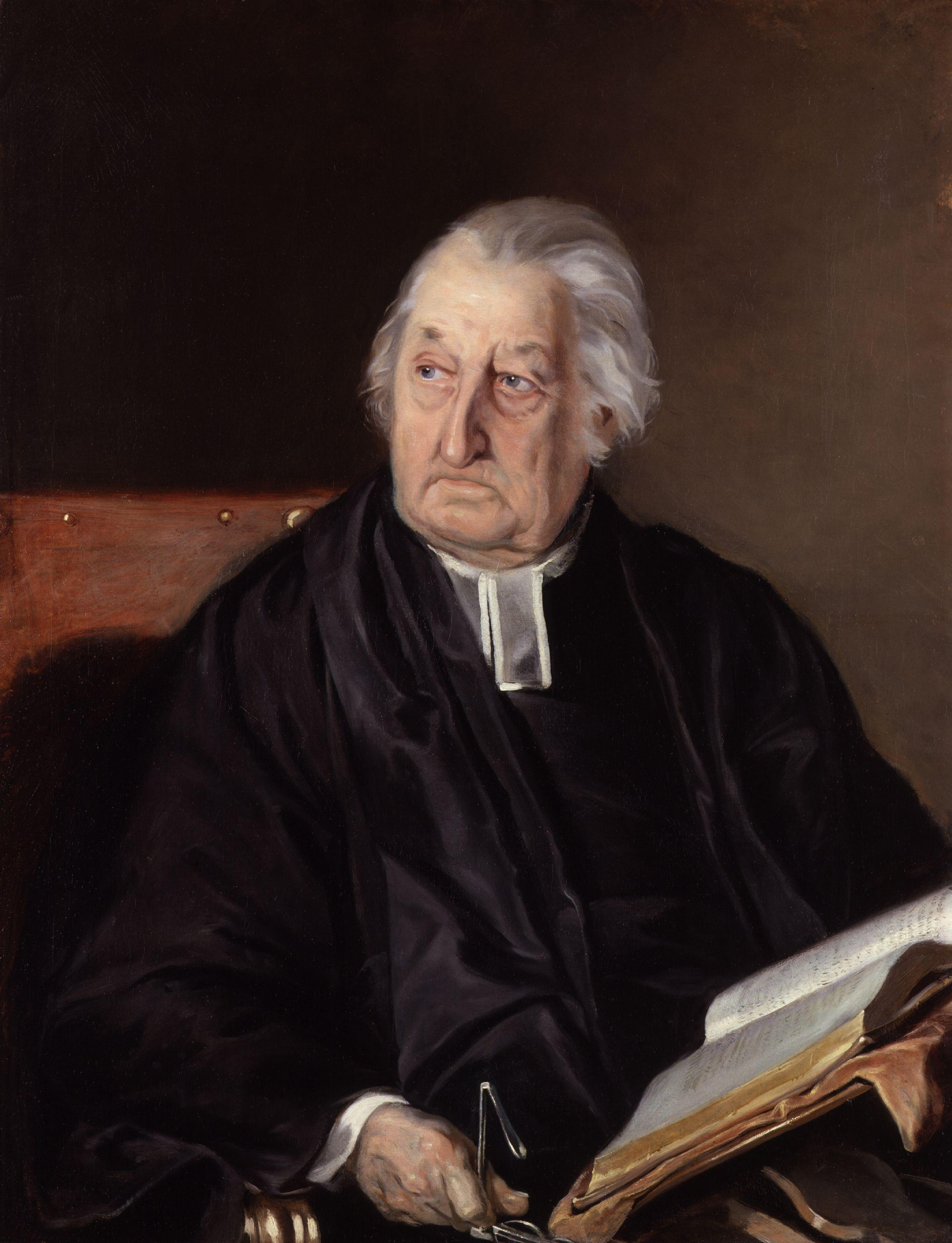
I can't really express how unappealing such empty 'religion' is to me. It's living a lie; a convenient way of fooling myself. Surely it speaks of an empty life - a need to atone for wrongdoing somehow, but a refusal to allow for any transformation. If wrongdoing really is wrong, then what could be better than to deal with it effectively? What could be more liberating? "No!" the world cries, "that's enslaving yourself to someone else's standards! That's not liberty!" The spiritual blindness shown in Lamb's opinion is just tragic, and all the more tragic because he speaks for multitudes. They cannot see the spiritual reality: 'Do you not know that to whom you present yourselves slaves to obey, you are that one's slaves whom you obey, whether of sin leading to death, or of obedience leading to righteousness?' (Romans 6:16). Rowland Hill, who died just 2 years before Lamb became PM, has something far more attractive to say (even if he looks so miserable in his portrait!):


"I would give nothing for that man's religion whose very dog and cat were not the better for it!"


This kind of attractive, comprehensive faith is the subject of a prayer I read this morning in The Valley of Vision - entitled by the compilers, 'True Religion'. The comprehensive sweep of its concerns over all aspects of life was what struck me.

Lord God Almighty,

I ask not to be enrolled amongst the earthly great and rich,
but to be numbered with the spiritually blessed.

Make it my present, supreme, persevering concern to obtain those blessings which are
spiritual in nature, eternal in their continuance, satisfying in their possession.

Preserve me from a false estimate of the whole or a part of my character;

May I pay regard to
my principles as well as my conduct,
my motives as well as my actions.

Help me
never to mistake the excitement of my passions for the renewing of the Holy Spirit,
never to judge my religion by occasional impressions and impulses, but by my constant and prevailing disposition.

May my heart be right with thee,

and my life as becometh the gospel.

May I maintain a supreme regard to another and better world,
and feel and confess myself a stranger and a pilgrim here.

Afford me all the direction, defence, support, and consolation my journey hence requires,

and grant me a mind stayed upon thee.

Give me large abundance of the supply of the Spirit of Jesus,

that I may be prepared for every duty,
love thee in all my mercies,
submit to thee in every trial,
trust thee when walking in darkness,
have peace in thee amidst life's changes.

Lord, I believe, help thou my unbelief and uncertainties.

How much of this religion would William Lamb have recognised? Isn't it something so much better?

Friday, 9 October 2009

Is substitionary atonement immoral?

Reading a comment by Mahmut on Simon Hutton’s blog here set me thinking about the morality of the biblical doctrine of substitutionary atonement. Simon has already posted a really helpful response here showing the necessity of understanding the biblical framework if you’re to meaningfully challenge the doctrine of substitutionary atonement – which is great, as that’s where I’d had in mind to start, but now there’s no need to say what’s already been said! So I’ll restrict myself to reflecting on just one point – doesn’t this doctrine lead to a ‘legal fiction’?

The Bible doesn’t simply teach that Jesus decided to step into our place and take the punishment on our behalf. Substitutionary atonement is only one part in a much bigger doctrine of salvation. Would that be moral? Would that satisfy God’s eternal justice? I think not. That tends to lead to ideas of God as an impersonal dispenser of justice – it doesn’t matter who 'gets it', just so long as someone does.

The Bible teaches something far greater than that – and, it must be said, something very different to our contemporary Western individualism. The Bible teaches that Christ acts as our representative head, just as Adam did. Perhaps a better illustration than the stories of one innocent person voluntarily standing in for the guilty would be the situation of the CEO of a corporation. He knows that his job will be on the line if there is corruption within the company – even if he wasn’t involved. He must be prepared to take responsibility for those under him. I am well aware that this illustration is very far from perfect – I offer it simply as a slight improvement on others that are more often heard to try, getting away from these ideas of radical individualism and suggesting ideas of more ‘corporate’ responsibility.

But the Christian’s relationship with Christ is not that of employee to CEO. The Bible describes it as being a far closer, more intimate and vital relationship – the relationship between the head and the body (Ephesians 5:23) or like a vine and its branches (John 15:1-7). The NT letters are peppered with phrases such as ‘in him’ or ‘in Christ’ to describe the Christian’s position.

Martin Luther, the great reformer, points to another NT image of the Church’s (=all Christians) relationship to Christ – that of bride to bridegroom in the covenant of marriage:

The third incomparable grace of faith is this: that it unites the soul to Christ, as the wife to the husband, by which mystery, as the Apostle teaches, Christ and the soul are made one flesh. Now if they are one flesh, and if a true marriage--nay, by far the most perfect of all marriages--is accomplished between them (for human marriages are but feeble types of this one great marriage), then it follows that all they have becomes theirs in common, as well good things as evil things; so that whatsoever Christ possesses, that the believing soul may take to itself and boast of as its own, and whatever belongs to the soul, that Christ claims as His.

If we compare these possessions, we shall see how inestimable is the gain. Christ is full of grace, life, and salvation; the soul is full of sin, death, and condemnation. Let faith step in, and then sin, death, and hell will belong to Christ, and grace, life, and salvation to the soul. For, if He is a Husband, He must needs take to Himself that which is His wife's, and at the same time, impart to His wife that which is His. For, in giving her His own body and Himself, how can He but give her all that is His? And, in taking to Himself the body of His wife, how can He but take to Himself all that is hers. In this is displayed the delightful sight, not only of communion, but of a prosperous warfare, of victory, salvation, and redemption. For, since Christ is God and man, and is such a Person as neither has sinned, nor dies, nor is condemned, nay, cannot sin, die, or be condemned, and since His righteousness, life, and salvation are invincible, eternal, and almighty,--when I say, such a Person, by the wedding-ring of faith, takes a share in the sins, death, and hell of His wife, nay, makes them His own, and deals with them no otherwise than as if they were His, and as if He Himself had sinned; and when He suffers, dies, and descends to hell, that He may overcome all things, and since sin, death, and hell cannot swallow Him up, they must needs be swallowed up by Him in stupendous conflict. For His righteousness rises above the sins of all men; His life is more powerful than all death; His salvation is more unconquerable than all hell.

Who then can value highly enough these royal nuptials? Who can comprehend the riches of the glory of this grace? Christ, that rich and pious Husband, takes as a wife a needy and impious harlot, redeeming her from all her evils and supplying her with all His good things. It is impossible now that her sins should destroy her, since they have been laid upon Christ and swallowed up in Him, and since she has in her Husband Christ a righteousness which she may claim as her own, and which she can set up with confidence against all her sins, against death and hell, saying, "If I have sinned, my Christ, in whom I believe, has not sinned; all mine is His, and all His is mine," as it is written, "My beloved is mine, and I am His" (Cant. ii. 16). This is what Paul says: "Thanks be to God, which giveth us the victory through our Lord Jesus Christ," victory over sin and death, as he says, "The sting of death is sin, and the strength of sin is the law" (1 Cor. xv. 56, 57).

Martin Luther, The Freedom of the Christian, written 1520.


Now, that may not sound terribly convincing to the modern mind either, but that’s because our radical modern individualism has seriously undermined our understanding of marriage. In the last year there has been a huge increase in the number of pre-nuptial agreements (I forget the figures – it was reported recently on the radio) as the modern individualist, quite logically, is in it for what they can get rather than for what they can give to their spouse, so it becomes a priority to protect yourself against the eventuality of it going wrong.

No, I’m not digressing. Rather this thought highlights a bigger issue – given the Bible’s teaching on salvation into which substitutionary atonement fits, the question of whether or not substitutionary atonement is immoral depends upon another question: should modern radical individualism be unquestioningly accepted as the basis of our ethical understanding, or could it be possible that this modern Western ideology may not hold the total supremacy it tends to assume for itself? If you hold on to your Western individualism, you won’t be able to make sense of biblical teaching. But if you allow the Bible to challenge your worldview, and if you begin to see the beauty and coherence of what it offers (I know which sort of marriage I want mine to be!) it all begins to fall into place.